


-
Quantifying Cis Jasmone in Modern Fragrance Chemistry
 This article provides a highly technical, analytical analysis of CIS JASMONE, focusing on its GC-MS resolution, structural isomerism, and formulation protocols. Designed for fragrance chemists, it covers precise dosing ratios, adulteration detection, and regulatory specifications.
 -
Analyzing CETALOX: Analytical Data, GC-MS Profiles, and Formulation Chemistry
 An analytical evaluation of CETALOX, detailing its stereochemistry, GC-MS fragmentation patterns, and fixative properties in modern perfumery. Discover how high-purity dodecahydro-3a,6,6,9a-tetramethylnaphtho[2,1-b]furan behaves under precise chromatographic and formulation conditions.
 -
Analyzing Florol: Chromatographic Profiles and Formulation Dynamics
 An analytical examination of Florol, focusing on its chromatographic characterization, isomer ratios, and predictive modeling. This guide provides precise formulation metrics and quality control standards for fragrance houses.
 -
Analyzing Dihydro Beta Ionone: Chromatographic Profiles and Olfactory Thresholds
 An analytical evaluation of Dihydro Beta Ionone, focusing on its chromatographic behavior, molecular stability, and precise formulation dynamics in modern perfumery. This technical brief details GC-MS profiles, olfactory thresholds, and quality control standards for professional fragrance houses.
 -
Analytical Evaluation of Evernyl in Modern Fragrance Chemistry
 An in-depth chemical and regulatory evaluation of Evernyl as a high-purity replacement for natural oakmoss in modern perfumery. This technical analysis explores GC-MS profiles, IFRA compliance, and AI-driven formulation ratios.
 -
Characterizing Methyl Cedryl Ketone: GC-MS Profiles and Performance
 Methyl Cedryl Ketone is a vital woody-amber fragrance ingredient valued for its outstanding fixative properties and isomeric complexity. This analytical guide examines its chemical structure, GC-MS identification, and formulation performance in modern perfumery.
 -
Analyzing Cyclamen Aldehyde: GC-MS Profiles and Formulation Stability
 This technical analysis explores the GC-MS profile, formulation stability, and analytical purity standards of Cyclamen Aldehyde. Written from the perspective of an analytical chemist, it covers precise molecular metrics, stabilization techniques in alkaline media, and the role of computational chemistry in modern formulation.
 -
Analytical Verification of Essential Oils: Purity Metrics for 2026
 This article explores the analytical methodologies used to verify the purity of essential oils in 2026, focusing on chiral GC-MS and ISO compliance. It provides a detailed breakdown of physical constants and extraction methods for industrial cosmetic formulators.
 -
The Future of Purity: Essential Oil Trends for 2026
 Discover the critical analytical trends shaping the purity of essential oils in 2026, focusing on advanced chiral GC-MS testing and subcritical water extraction. Learn how to safeguard your bulk supply from complex chemical adulteration using precise laboratory standards.
 -
Characterizing Cis 3 Hexanol: GC-MS Analysis and Formulation
 This technical guide explores the analytical chemistry and formulation of cis 3 hexanol and its unsaturated counterpart, cis-3-hexen-1-ol. Learn how to verify purity using GC-MS and implement precise dosing in fine fragrance accords.
 -
The Future of Purity: Essential Oils Bulk Supply Trends for 2026
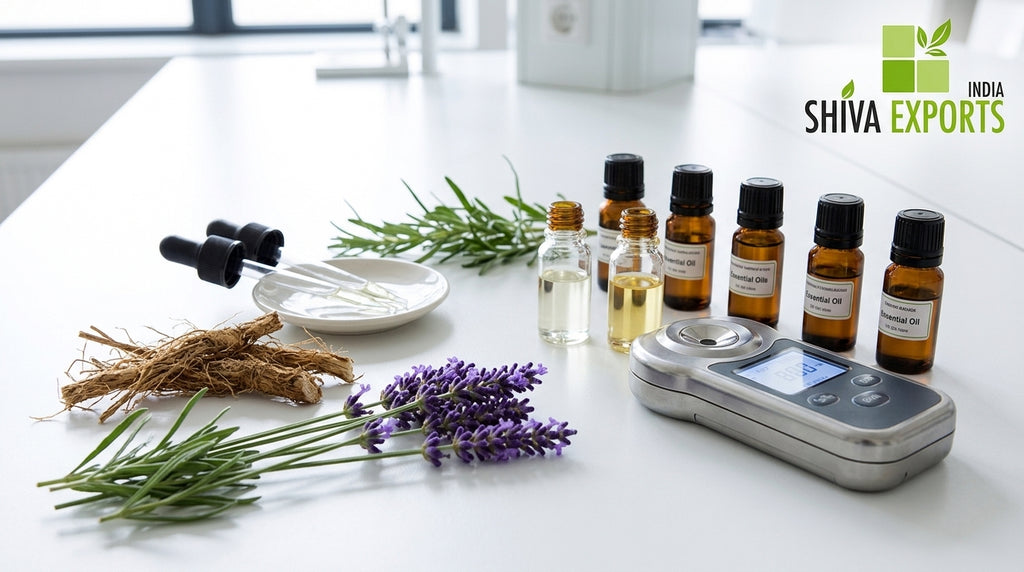 As standard purity claims fall short in 2026, high-resolution analytical testing is redefining the essential oils market. Discover how advanced techniques like chiral GC-MS are shaping the future of industrial procurement.
 -
Bakuchiol 99% in EU Formulations: Stability and Compliance
 Formulating with Bakuchiol 99% as a retinol alternative in the EU requires meticulous attention to ingredient purity, stability, and regulatory compliance. This analytical perspective details the critical differences between crude extracts and high-purity bakuchiol, offers data-driven strategies for stabilizing the molecule in various formulations, and navigates the complexities of EU cosmetic safety assessments.
Close
Login
Close